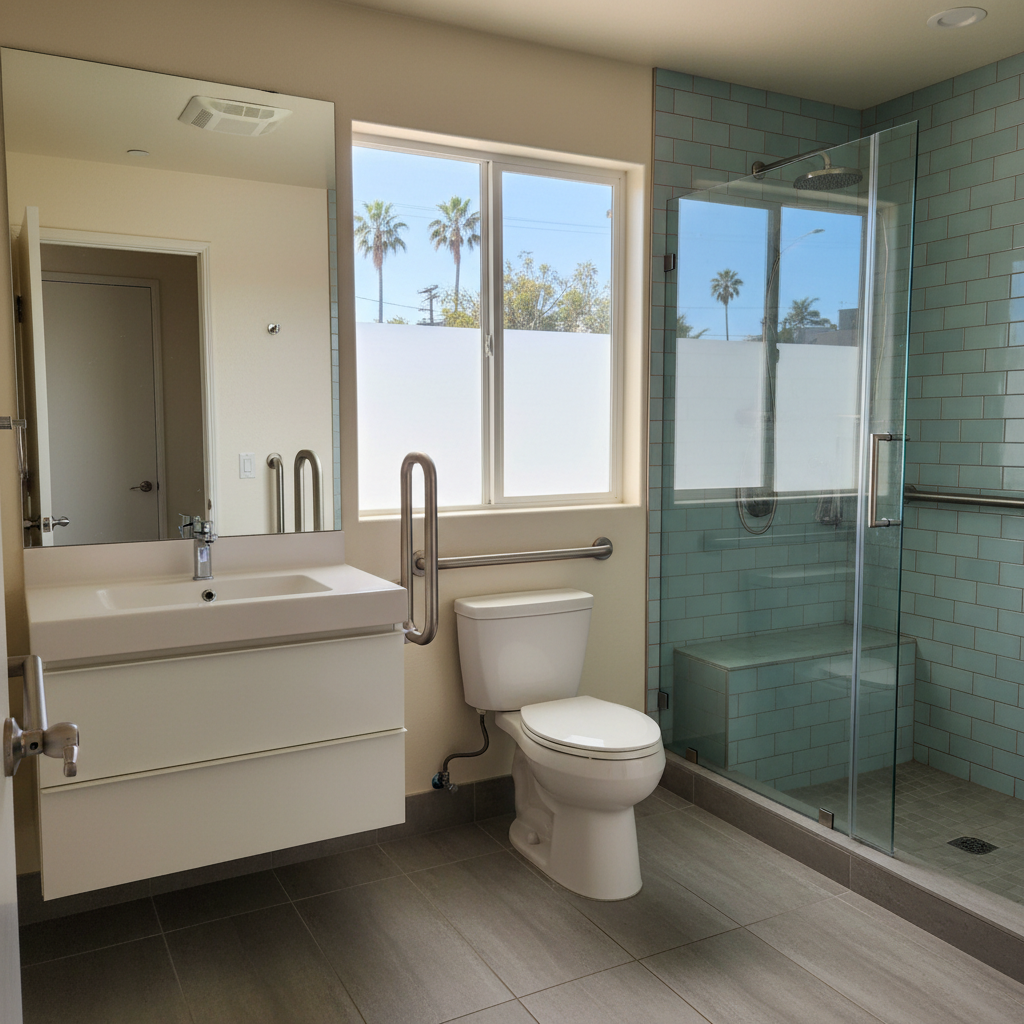
Alright, let's talk about accessible bathrooms and what they actually cost here in Long Beach. It's not just about slapping in a grab bar; we're talking about making a space truly functional and safe for someone with mobility challenges. And yeah, that comes with a price tag, but it's an investment in independence and quality of life.
What Makes the Price Tag Go Up or Down?
A few big things really move the needle on cost. It's not one-size-fits-all, that's for sure.
- Scope of Work: Are we just adding a few things, or are we tearing out walls and reconfiguring the whole layout? A simple conversion, like swapping a tub for a roll-in shower and adding some grab bars, is way different from a full gut job that includes widening doorways, moving plumbing, and installing new flooring.
- Material Choices: You can go basic or you can go luxury. Slip-resistant tile is a must, but there's a huge range in price and style. The same goes for shower fixtures, vanities, and even the type of grab bars. Stainless steel grab bars are standard, but you can definitely find decorative ones that cost more.
- Existing Conditions: This is a big one, especially in older Long Beach homes, say, those charming bungalows in Belmont Heights or Bluff Park. Sometimes you open up a wall and find old plumbing that needs replacing, or electrical that isn't up to code. That's unexpected but necessary work, and it adds to the bill. Foundation issues, common with our coastal soil, can also throw a wrench in things if they affect the bathroom structure.
- Labor Complexity: Moving drain lines or water supply lines is more complex than just replacing existing fixtures. If we need to modify structural elements, like widening a doorway in a load-bearing wall, that requires engineering and more specialized labor.
Typical Cost Ranges for Accessible Bathrooms in Long Beach
Look, I'm not going to give you some vague 'it depends' answer. Here's what I've seen homeowners pay for different levels of accessible bathroom remodels:
- Basic Accessibility Upgrades (e.g., grab bars, raised toilet, new shower head): You're probably looking at $2,000 - $7,000. This is for adding essential safety features without major construction.
- Mid-Range Accessible Remodel (e.g., tub-to-shower conversion, roll-in shower, new vanity, grab bars, improved lighting): This is where most people land, costing anywhere from $15,000 - $35,000. This often involves removing a traditional tub and installing a curbless or low-threshold shower, a comfort-height toilet, and a vanity that allows for wheelchair access underneath.
- Full Accessible Bathroom Renovation (e.g., complete gut, widened doorways, structural changes, moved plumbing, custom roll-in shower, specialized fixtures, smart home tech): For a complete overhaul, especially if you're dealing with structural changes or moving walls, expect to pay $40,000 - $75,000+. This is a comprehensive project designed for maximum independence and safety, often including features like adjustable height sinks or smart shower controls.
Keep in mind, these are averages. A small bathroom in a condo will naturally cost less than a large master bath in a single-family home.
What Should a Quote Include?
When you get a quote from me or any other reputable contractor, it should be detailed. Don't accept a one-page estimate with just a total number. You want to see:
- Detailed Scope of Work: Exactly what's being done, step-by-step.
- Material Breakdown: Specific fixtures, tile, paint, and other finishes, with their costs.
- Labor Costs: How many hours or days are estimated for each phase of the work.
- Permit Fees: Any necessary permits from the City of Long Beach Development Services should be listed.
- Contingency: A good contractor will often include a small contingency (5-10%) for unforeseen issues, especially in older homes. It's better to plan for it than be surprised.
- Payment Schedule: Clear milestones for payments.
- Warranty Information: What's covered after the work is done.
How to Avoid Overpaying
Nobody wants to get ripped off, especially on something as important as an accessible bathroom. Here's my advice:
- Get Multiple Bids: Don't just go with the first contractor you talk to. Get at least three detailed quotes. This helps you compare not just price, but also the proposed scope of work and the contractor's approach.
- Be Specific About Your Needs: The more clearly you communicate what you need and want, the more accurate the quote will be. Don't assume the contractor knows exactly what you're picturing.
- Check References and Licenses: Always, always check that the contractor is licensed and insured. Ask for references and actually call them.
- Don't Rush Decisions: Take your time to review quotes and ask questions. A good contractor won't pressure you.
- Understand the Value: Sometimes a higher bid isn't overpaying; it's paying for quality materials, experienced labor, and a solid warranty. A super low bid can be a red flag for cutting corners or unexpected add-ons later.
An accessible bathroom isn't just about code compliance; it's about making a home work for the people in it. It's a significant investment, but when done right, it makes a world of difference. If you're in Long Beach and thinking about this kind of project, give us a call at Long Beach Bathroom Solutions. We can walk you through your options and give you a solid plan.